AI That Actually Works for Small Business
There's a massive gap between the AI hype cycle and what actually works for NZ SMEs. You don't need a $100K machine learning platform. You need specific, practical AI tools that solve real problems and pay for themselves quickly.
Here are five AI implementations we've seen deliver measurable ROI for Kiwi businesses — each under $5,000 to implement.
Short version: a custom workflow from Growin is $3,500–$5,000 fixed per workflow (+ GST).
1. Intelligent Lead Qualification Forms
Typical market cost (tools + setup): $3,000–$5,000 ROI timeline: 2-4 weeks Best for: Service businesses, B2B companies, trades
The Problem
Your contact form collects a name, email, and a vague message. Your team spends hours qualifying leads that turn out to be tyre-kickers, spam, or people who can't afford your services.
The AI Solution
Multi-step forms with built-in intelligence that:
- Ask progressively qualifying questions based on previous answers
- Use behaviour analysis to score lead intent (time spent, engagement patterns)
- Route high-quality leads to sales immediately
- Send lower-quality leads into automated nurturing sequences
- Block spam without CAPTCHAs that frustrate real customers
Real Results
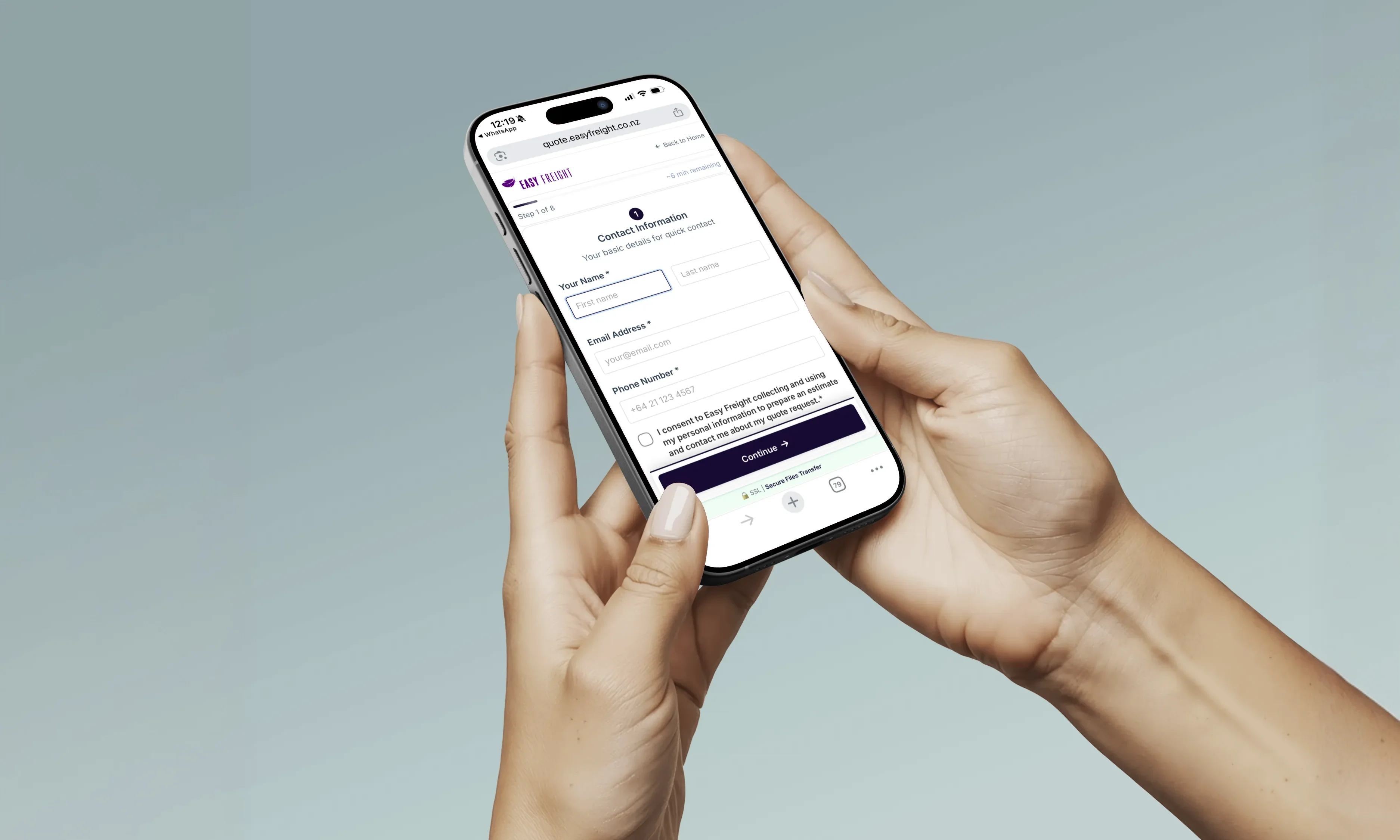
EasyFreight implemented intelligent form automation and saw:
- $13,100 in new-customer revenue in the first 60 days, on an $8,000 fixed-price system
- Zero spam (down from a significant daily problem)
How It Works
The form uses conditional logic and AI scoring to create different paths for different users. A freight company might ask about shipment type first — if someone selects "personal belongings," they're redirected to educational content rather than clogging the sales pipeline. If they select "commercial freight" with a high-value shipment, they're fast-tracked to a broker.
The AI layer analyses behaviour patterns: how quickly they fill out fields, whether they read the terms, how they arrived at the site. This creates a lead score that prioritises follow-up.
A Growin-built version of any of these is $3,500–$5,000 fixed per workflow (+ GST).
2. AI-Powered Google Ads Management
Typical market cost (tools + setup): $2,000–$4,000 setup + ad spend ROI timeline: 2-4 weeks Best for: Any business that needs leads from Google
The Problem
You're either not running Google Ads (missing potential customers actively searching for what you sell) or you're running them poorly (wasting budget on irrelevant clicks).
The AI Solution
Our AI engine handles the entire campaign setup in under 60 minutes:
- Research: AI analyses your industry, competitors, and search landscape
- Keywords: Machine learning identifies high-intent, low-competition opportunities
- Ad copy: AI generates and tests multiple ad variations
- Landing pages: Purpose-built pages designed to convert specific search intent
- Optimisation: Continuous AI-driven bid management and quality score improvement
Why This Matters for NZ Businesses
Google Ads in NZ is less competitive than Australia, the US, or UK. That means:
- Lower cost per click for the same keywords
- Higher potential ROI per dollar spent
- More opportunity for SMEs to compete with larger businesses
Real Results
Our AI engine consistently delivers:
- Campaigns set up in about 60 minutes from a brief
- Every lead tracked from click to enquiry
Want to understand the technology behind these results? Learn how agentic AI takes Google Ads management further with multi-agent orchestration and autonomous daily optimisation.
3. Automated Customer Follow-Up Sequences
Typical market cost (tools + setup): $1,500–$3,000 ROI timeline: 1-2 weeks Best for: Any business where the sales cycle is longer than one interaction
The Problem
A potential customer enquires on Monday. Your team is busy, so they follow up on Thursday. By then, the customer has contacted three competitors and made a decision. You lost the deal not because of price or quality, but because of response time.
The AI Solution
Automated sequences that:
- Respond instantly — acknowledgement email within 60 seconds of enquiry
- Provide value — send relevant case studies, pricing guides, or FAQs automatically
- Follow up intelligently — space follow-ups based on engagement (opened email? Clicked link? Visited pricing page?)
- Alert your team — notify sales when a lead shows high-intent signals
- Re-engage — automatically reach out to dormant leads at optimal intervals
How to Implement
- Map your current follow-up process (or lack thereof)
- Identify the 3-5 most common customer questions
- Create content that answers those questions
- Set up automated sequences triggered by form submissions
- Configure alerts for high-intent behaviour
What It Costs
- Email automation tool: $30-100/month (Brevo, Mailchimp, or similar)
- Setup and content creation: $1,500-3,000 one-off
- Ongoing management: 2-3 hours/month
Expected Results
- Every enquiry gets a reply straight away, not when someone gets to it
4. AI Chatbot for Customer Service
Typical market cost (tools + setup): $2,000–$4,500 ROI timeline: 2-4 weeks Best for: Businesses with high volumes of repetitive enquiries
The Problem
Your team answers the same 20 questions every day. "What are your hours?" "Do you deliver to [location]?" "How much does [service] cost?" It's necessary work, but it's not the best use of your team's time.
The AI Solution
A modern AI chatbot (not the frustrating ones from 2018) that:
- Understands natural language questions, not just keyword matching
- Answers accurately from your actual business data (hours, services, pricing, policies)
- Handles multiple conversations simultaneously
- Escalates to a human when the question is complex or high-value
- Available 24/7, including weekends and public holidays
- Learns from interactions to improve over time
What's Changed Since the "Bad Chatbot" Era
Modern AI chatbots powered by large language models are fundamentally different from the old rule-based chatbots:
- They understand context and nuance
- They can handle questions they weren't specifically programmed for
- They sound natural, not robotic
- They can be trained on your specific business knowledge
Implementation Approach
- Identify your top 20 most common customer questions
- Compile accurate answers and business information
- Configure the AI model with your brand voice and knowledge base
- Test with real scenarios and edge cases
- Deploy with human escalation for complex queries
- Monitor and refine based on actual conversations
Expected Results
- 24/7 availability without additional staff costs
- Average response time under 5 seconds (vs minutes or hours for email)
- Staff time freed up for high-value activities
5. Smart Product Data Optimisation
Typical market cost (tools + setup): $2,000–$5,000 ROI timeline: 4-8 weeks (SEO takes slightly longer to compound) Best for: E-commerce businesses, any business with products or services listed online
The Problem
Your products are listed online, but Google doesn't properly understand what you sell. Your product titles are internal codes, descriptions are manufacturer copy-paste, and your Google Shopping feed is a mess. Customers searching for exactly what you sell don't find you.
The AI Solution
AI-powered product data optimisation that:
- Rewrites product titles to match actual search queries NZ customers use
- Generates unique descriptions tailored for both humans and search engines
- Optimises category mapping for Google Shopping and Merchant Centre
- Creates structured data so Google displays rich results (prices, availability, reviews)
- Identifies gaps — products with high search volume but poor visibility
Real Example
BatteryTech NZ had hundreds of products with technical model numbers as titles. Nobody searches for "YTX20CH-BS 12V 18Ah." They search for "motorcycle battery NZ" or "Honda CRF battery replacement."
After AI-optimised product data:
- Google Shopping visibility went from near-zero to consistent daily impressions
- Free listing clicks generated bonus sales at zero ad cost
- Organic search traffic increased as Google properly categorised products
The NZ Advantage
New Zealand's smaller market means:
- Less competition for product-specific keywords
- Higher likelihood of ranking on page 1 for optimised products
- Local search modifiers ("NZ", city names) are easy to target
- AI search tools (ChatGPT, Google AI Overview) favour well-structured product data
Choosing Your First AI Quick Win
Not sure which one to start with? Here's a simple decision framework:
Start with #1 (Intelligent Forms) if:
- You get a lot of enquiries but few quality leads
- Your team wastes time on unqualified prospects
Start with #2 (AI Google Ads) if:
- You need more leads and aren't running Google Ads yet
- Your current ads aren't performing well
Start with #3 (Automated Follow-Ups) if:
- Your follow-up process is slow or inconsistent
- You lose deals to faster competitors
Start with #4 (AI Chatbot) if:
- You answer the same questions repeatedly
- Customers contact you outside business hours
Start with #5 (Product Data) if:
- You sell products online and Google Shopping is underperforming
- Customers can't find your products in search results
The Common Thread
Every one of these AI implementations shares the same principle: automate the repetitive so humans can focus on the valuable.
Your team's time is best spent on complex problems, relationship building, and strategic decisions — not answering "what are your hours?" for the hundredth time or manually qualifying leads that a well-configured form could handle instantly.
The businesses winning in 2026 aren't the ones with the most AI tools. They're the ones applying the right AI to the right problems, starting with quick wins that prove the ROI, then expanding strategically.
Once a quick win is live, the next step is usually stacking more: connecting quoting, invoicing, scheduling, and follow-up into one system that runs end-to-end. That's the core of AI-powered workflows for NZ businesses — same principle as above, applied across the whole back office instead of one task at a time.