What Is Agentic AI? (And Why It's Not Just Another Chatbot)
Agentic AI refers to artificial intelligence systems that can independently plan, reason, and take action to achieve goals — without a human guiding every step. Unlike a chatbot that answers questions or a copilot that suggests completions, an AI agent receives an objective, breaks it into tasks, uses tools, adapts when things go wrong, and delivers outcomes.
Think of the difference like this: a chatbot is a search bar with a personality. A copilot is a smart assistant looking over your shoulder. An agentic AI system is a skilled employee who takes a brief, does the work, and comes back with results.
What makes agentic AI fundamentally different:
- Autonomous decision-making — agents evaluate options and choose actions without waiting for human input on every step
- Tool use — they interact with real systems: databases, APIs, spreadsheets, ad platforms, CRMs
- Multi-step reasoning — they break complex goals into subtasks and execute them in sequence
- Adaptive behaviour — when something fails or changes, they adjust their approach
- Persistence — they work through problems over time, not just in a single conversation turn
As MIT Sloan Management Review put it: "The shift from AI as a tool to AI as an agent represents the most significant change in how businesses will operate since the internet."
How Agentic AI Differs from Traditional AI Tools
Most AI tools NZ businesses use today fall into two categories: chatbots and copilots. Agentic AI is a third, fundamentally different category.
| Capability | Chatbot | Copilot | Agentic AI |
|---|---|---|---|
| Interaction | Q&A, single turn | Suggests, human decides | Plans and executes autonomously |
| Tool use | None | Limited | Full access to external systems |
| Memory | Conversation only | Session-based | Persistent across tasks |
| Decision-making | Answers questions | Recommends options | Makes and implements decisions |
| Error handling | Fails or halluccinates | Flags issues | Retries, adapts, escalates |
| Example | ChatGPT answering "what's CPC?" | GitHub Copilot suggesting code | AI system managing your Google Ads daily |
Multi-Agent Orchestration
The real power comes from multiple specialised agents working together. Rather than one general-purpose AI trying to do everything (and doing nothing well), you deploy a team of focused agents — each an expert at one thing.
Imagine a marketing team where the researcher never has to write copy, the copywriter never has to analyse data, and the campaign manager never has to build landing pages. Each agent focuses on what it does best, and an orchestration layer coordinates the workflow.
This is how modern agentic AI systems work in practice: a pipeline of specialised agents, each handling one step, with human oversight at critical checkpoints.
Why This Matters for NZ Businesses Right Now
The Numbers
The data tells a clear story about where AI adoption is heading:
- 70% of CEOs globally expect AI to fundamentally transform their industry within 3 years (KPMG 2025 CEO Outlook)
- 68% of NZ SMEs have no formal AI strategy — they're aware of AI but haven't implemented it strategically (NZ Tech 2025 survey)
- $16 billion NZD is the projected contribution of AI to the NZ economy by 2038 (NZ AI Forum)
- Only 12% of NZ businesses are using AI beyond basic chatbots or content generation
There's a massive gap between awareness and action. Most NZ businesses know AI matters, but haven't figured out where to start with implementations that go beyond ChatGPT.
The First-Mover Window
Here's what makes this moment uniquely valuable for NZ businesses: the window between "AI is available" and "everyone uses it" is approximately 12-24 months.
We're in that window right now for agentic AI. The technology is production-ready. The costs are accessible for SMEs. But most businesses haven't adopted it yet.
That means businesses that move now gain:
- Lower costs — early adoption often costs less than competing when everyone else has caught up
- Data advantage — AI systems improve with data; starting earlier means your system gets smarter faster
- Market positioning — being the business in your industry known for speed, accuracy, and efficiency
- Talent advantage — the best implementation partners are available now; in 24 months, they'll have waiting lists
The businesses that adopted e-commerce early, or Google Ads early, or SEO early, disproportionately dominated their markets. Agentic AI follows the same pattern.
Agentic AI in Action: Real Results from 4 NZ Campaigns
We don't just talk about agentic AI — we built one. GrowinAd is our production-grade multi-agent AI system that manages real Google Ads campaigns for NZ businesses. It's not a prototype or a demo. It manages live campaigns with real budgets and measurable results.
Agent vs Human: Google Ads Management
Here's what we've measured across four NZ client campaigns, comparing traditional human-managed campaigns against our AI agent system:
| Metric | Human-Managed | GrowinAd Agent |
|---|---|---|
| Click-through rate | 6.25% | 9-13% |
| Search term relevance | 30% | 95% |
| Negative keywords identified | 15 | 167 |
| Campaign set-up time | Varies | About 60 minutes from a brief |
| Daily optimisation audits | Manual/weekly | Automated/daily |
These aren't theoretical numbers. They're from EasyFreight, KiwiCraft Kitchens, BatteryTech, and our own Growin campaigns.
EasyFreight: A freight logistics company that needed to filter out unqualified leads and focus on high-value commercial enquiries. Our AI agent system brought in $13,100 of new-customer revenue in its first 60 days, on an $8,000 fixed-price system, and eliminated the spam problem.
KiwiCraft Kitchens: A kitchen renovation company that had spent $3,875 on a traditional agency setup with almost no results — poor keyword targeting, irrelevant traffic, wasted budget. Our AI agent launched a properly structured campaign in under 2 hours for approximately $500 in setup. The AI identified 167 negative keywords that the human campaign had missed entirely, and search term relevance jumped from roughly 30% to 95%.
How It Works: Multi-Agent Orchestration
GrowinAd isn't a single AI — it's a team of specialised agents:
-
Campaign Strategy Agent — analyses the business, industry, competitors, and search landscape. Identifies high-intent keyword opportunities and builds campaign architecture.
-
Landing Page & SEO Agent — creates purpose-built landing pages optimised for specific search intents. Handles on-page SEO, structured data, and conversion elements.
-
Campaign Optimiser Agent — monitors live campaigns daily. Analyses search terms, adjusts bids, identifies negative keywords, and flags anomalies. This is the agent that found 167 negative keywords that humans missed.
-
Copywriter Agent — generates and tests ad copy variations. Writes headlines, descriptions, and extensions tailored to each keyword group and audience segment.
Each agent operates within defined guardrails. Critical decisions — budget changes, campaign pausing, new keyword themes — go through human approval via Telegram notifications. The system recommends; humans approve.
This isn't about replacing people. It's about giving your team an AI workforce that handles the repetitive analysis and execution, so humans focus on strategy and client relationships.
3 Practical Scenarios Where Agentic AI Delivers ROI
Beyond Google Ads, agentic AI creates value in three common business scenarios that most NZ SMEs deal with daily.
Converting Leads While You Sleep
The problem: A potential customer fills out your form at 9pm. Your team sees it at 9am the next day. By then, they've contacted three competitors.
The agentic AI solution: An AI agent monitors form submissions 24/7. Within seconds of a new lead arriving, it:
- Scores the lead based on behaviour analysis and form responses
- Sends an instant, personalised acknowledgement (not a generic "we'll be in touch")
- Routes high-value leads to on-call sales via push notification
- Begins an intelligent follow-up sequence tailored to the lead's specific interest
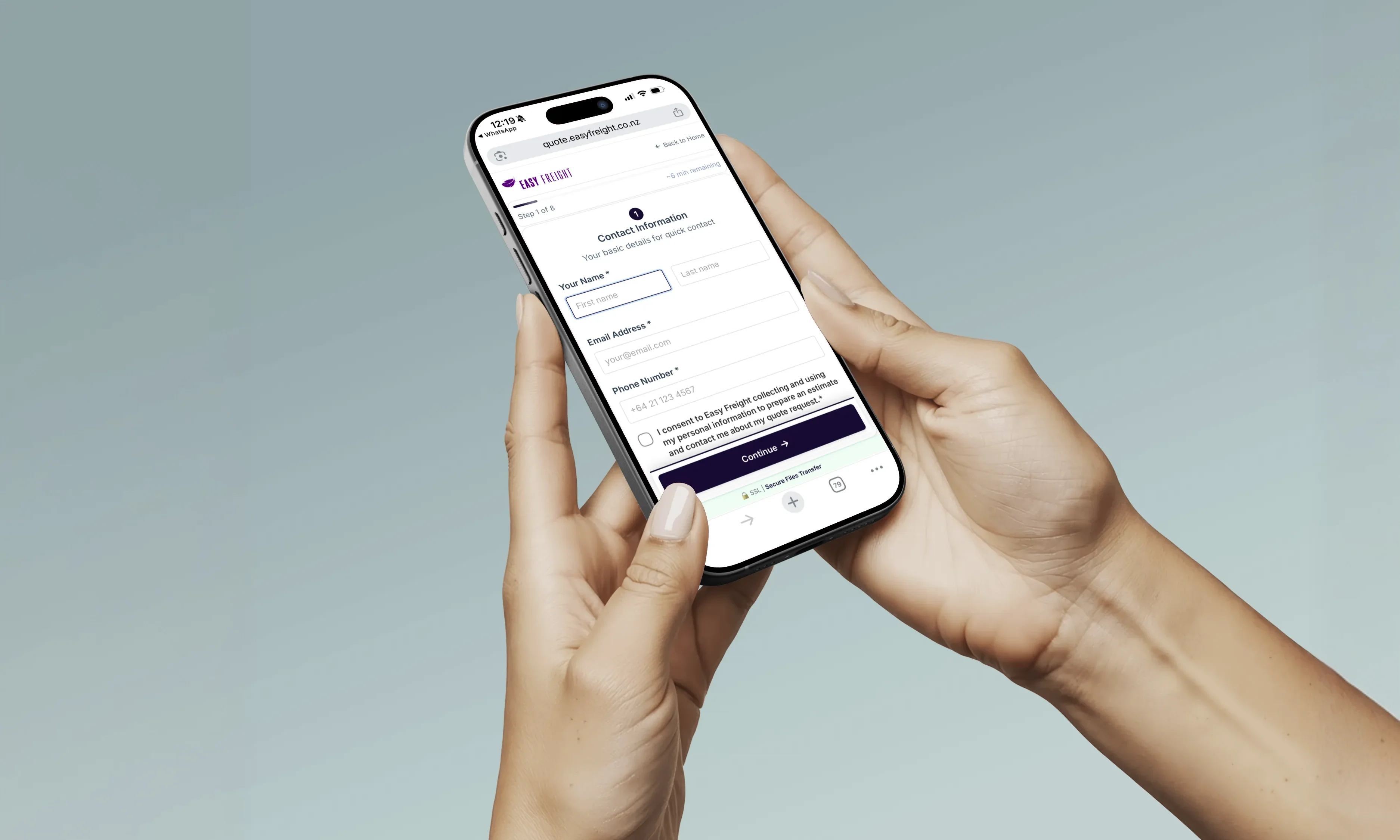
Real result: EasyFreight's intelligent form system processes leads instantly, qualifies them automatically, and routes them to the right broker. That's not incremental improvement; it's a fundamentally different way of handling inbound leads.
Campaign Management That Never Sleeps
The problem: Your Google Ads campaign launched three weeks ago. Nobody has checked the search terms since last Tuesday. You're paying for clicks from people searching for things you don't sell.
The agentic AI solution: A campaign optimiser agent runs daily audits:
- Reviews every search term that triggered your ads
- Identifies irrelevant terms and adds them as negatives
- Monitors quality scores and recommends improvements
- Detects budget anomalies or performance drops
- Sends daily reports with recommended actions
Real result: Across our client portfolio, AI-managed campaigns maintain 95% search term relevance vs ~30% for human-managed campaigns. That's the difference between 95 cents of every dollar reaching the right people vs 30 cents.
Ending the Swivel-Chair Data Entry
The problem: A customer pays an invoice in Xero. Someone manually updates the CRM. Then someone updates the project management tool. Then someone sends a Slack message to the team. Four systems, four manual updates, four opportunities for human error.
The agentic AI solution: An integration agent monitors trigger events and cascades updates across systems:
- Payment received in Xero → CRM status updated → project tool marked "paid" → Slack notification sent → follow-up email triggered
- All automatic, all within seconds, all logged for audit
For a business processing 50+ transactions per week, this saves 5-10 hours of manual data entry and eliminates the errors that come from doing the same thing hundreds of times.
3 Questions to Ask Before You Invest
Not every business needs agentic AI right now. Here's how to assess whether you're ready:
1. What repetitive tasks cost the most time?
List every task your team does more than 10 times per week that follows a predictable pattern. Lead qualification, data entry between systems, report generation, campaign monitoring, invoice processing — these are prime candidates for AI agents.
If you can describe the task as "look at X, decide Y, do Z" with clear rules, an agent can likely handle it.
2. Where are we losing revenue due to speed or friction?
Think about where delays cost you money:
- How fast do you respond to new leads? (Every hour of delay reduces conversion probability by ~10%)
- How quickly do you adjust campaigns when performance changes?
- How long does it take to onboard a new customer?
- Where do potential customers drop off in your process?
Each of these friction points represents revenue that an AI agent could capture.
3. What would 20% less operational overhead mean for growth?
If your team suddenly had 20% more time, what would they do with it? If the answer is "more of what they're already doing" then you have a scaling problem that AI agents can solve. If the answer is "we'd finally focus on strategy and growth" then you have a leverage problem — and that's even more valuable to solve.
Where to Start: From Quick Wins to Agentic Systems
Agentic AI isn't an all-or-nothing investment. Here's a practical path:
Start with quick wins (weeks 1-4): If you haven't implemented basic AI automation yet, start there. Our guide to 5 practical AI quick wins for NZ SMEs covers implementations under $5,000 that deliver ROI in weeks — intelligent forms, AI-powered ad management, automated follow-ups, chatbots, and product data optimisation.
Build your digital foundation (months 1-2): Agentic AI works best when your digital infrastructure is solid. That means proper analytics, CRM integration, and connected systems. Our digital transformation guide walks through a 90-day plan.
Understand costs and ROI (before you commit): Know what you're investing and what to expect back. The digital transformation cost guide for NZ businesses provides realistic budgets across different investment levels.
Move to agentic systems (months 2-6): Once your foundation is solid, deploy specialised AI agents for your highest-value use cases. Start with one — usually lead management or campaign optimisation — prove the ROI, then expand.
The businesses that thrive in 2026 won't be the ones with the most AI tools. They'll be the ones that deployed the right AI agents on the right problems, with proper guardrails and human oversight.
Ready to explore what agentic AI could do for your business? Our Free AI Workflow Scan finds the process costing you most and what it would take to automate it.
Growin specialises in AI-powered lead generation and AI-powered workflows for NZ businesses. We build the systems, deploy the agents, and measure the results.