What Digital Transformation Actually Means for NZ Businesses
Let's cut through the jargon. Digital transformation isn't about replacing everything with AI or rebuilding your entire business from scratch. For most NZ SMEs, it means using technology to solve specific business problems that are costing you money right now.
Think about the freight company still processing quotes manually over email. Or the trade business where the owner spends 10 hours a week on admin that could be automated. That's where digital transformation starts — with the pain points.
According to MBIE's 2025 Digital Economy report, only 31% of NZ SMEs have a digital strategy. That means 69% of Kiwi businesses are making technology decisions reactively, usually when something breaks or a competitor pulls ahead.
The 4 Pillars of SME Digital Transformation
1. Customer-Facing Digital (Revenue Impact)
This is where most businesses should start because it directly affects revenue. It includes:
- Your website or web app — is it converting visitors into leads, or is it a digital brochure?
- Online visibility — can customers find you on Google, Google Maps, and AI search tools?
- Lead capture and qualification — are you collecting the right information to close deals faster?
- E-commerce — if you sell products, is the online experience frictionless?
Real example: We worked with BatteryTech NZ, an Auckland battery retailer averaging $855/month in online sales. After fixing product data, optimising Google Shopping, and repairing checkout friction, they hit $7,384/month — a 764% increase. No massive ad budget. Just fixing what was broken.
2. Internal Operations (Efficiency Impact)
This is where automation saves hours every week:
- Quoting and invoicing — manual processes that could be instant
- Customer communications — follow-ups that happen automatically
- Data entry — information that flows between systems without re-typing
- Reporting — dashboards that update themselves instead of spreadsheet wrangling
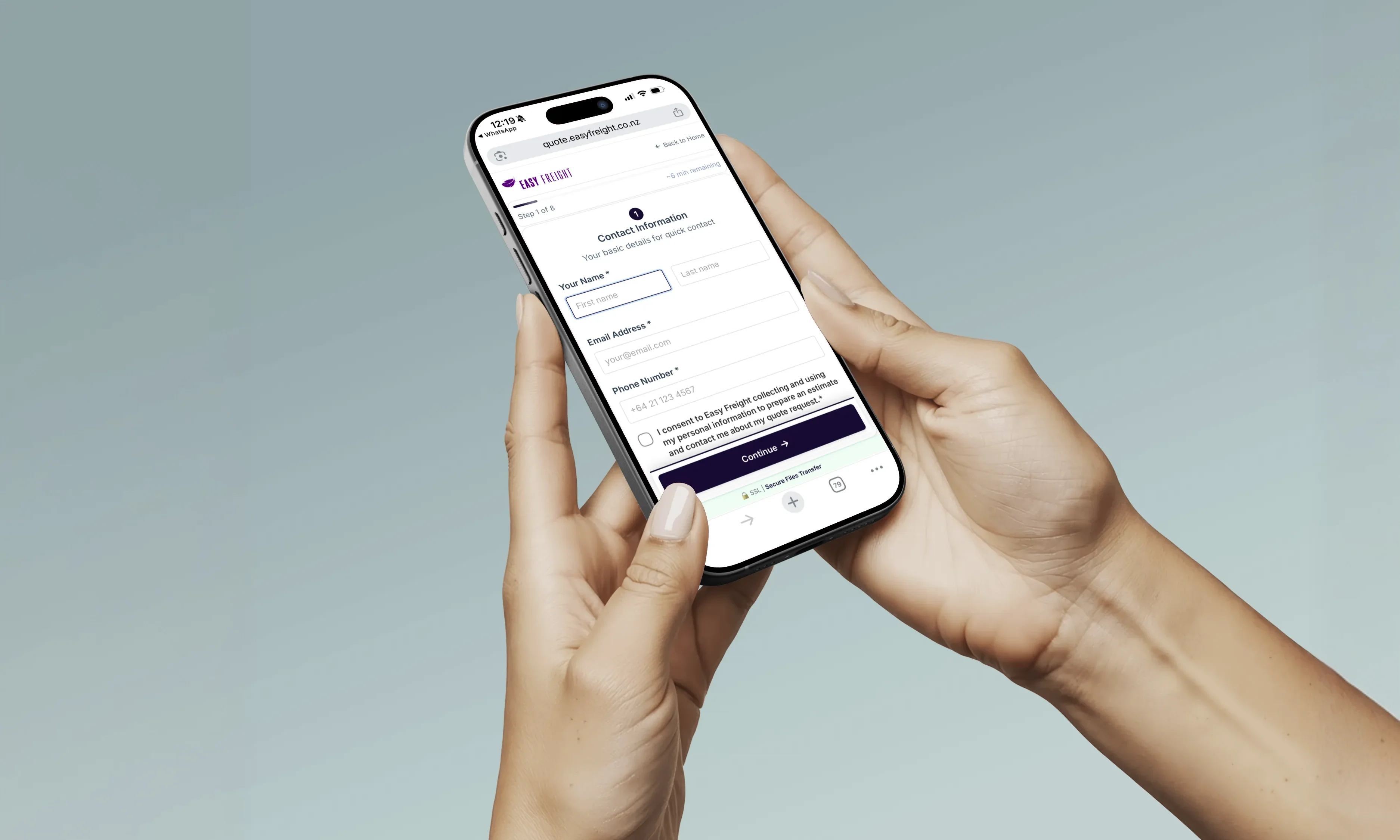
Real example: EasyFreight's quote-and-qualify system brought in $13,100 of new-customer revenue in its first 60 days, on an $8,000 fixed-price system.
3. Data and Decision-Making (Strategic Impact)
Most SMEs are data-rich but insight-poor:
- Analytics that matter — knowing which marketing channels actually drive revenue
- Customer behaviour tracking — understanding what makes people buy (or leave)
- Forecasting — using historical data to predict demand and plan resources
- Attribution — connecting marketing spend to actual sales, not just clicks
4. AI and Intelligent Automation (Competitive Advantage)
AI isn't science fiction — it's practical tools that save time:
- AI-powered chatbots that handle common customer queries 24/7
- Intelligent lead scoring that prioritises your hottest prospects
- Content generation that helps you maintain consistent marketing
- Process automation that connects your tools and eliminates manual steps
The next frontier beyond these tools is agentic AI — autonomous systems that plan, reason, and take action on behalf of your business. Where traditional AI tools assist, agentic AI executes.
Where to Start: The 90-Day Roadmap
Don't try to transform everything at once. Here's a practical sequence:
Days 1-30: Audit and Quick Wins
- Map your current tech stack — what tools do you use, what do they cost, where are the gaps?
- Identify your biggest time drain — what manual process consumes the most hours?
- Fix your website basics — speed, mobile experience, clear CTAs, proper analytics tracking
- Set up Google Business Profile — free visibility that most NZ businesses underutilise
Days 31-60: Revenue Infrastructure
- Implement proper lead capture — forms that qualify, not just collect
- Set up email automation — welcome sequences, follow-ups, re-engagement
- Optimise your Google presence — organic search, Google Ads, Google Shopping (if applicable)
- Install conversion tracking — know exactly where your customers come from
Days 61-90: Automation and Scale
- Automate your highest-volume manual process — quoting, booking, reporting
- Connect your systems — CRM to email to invoicing to reporting
- Implement AI where it adds value — chatbot, lead scoring, content assistance
- Measure and optimise — review what's working and double down
The Cost Reality Check
NZ businesses consistently overestimate what digital transformation costs and underestimate the ROI. Here's what we actually see:
| Investment Level | What You Get | Typical ROI Timeline |
|---|---|---|
| $2,000–5,000 | Website optimisation + analytics + basic automation | 1-2 months |
| $5,000–15,000 | Custom lead generation system + CRM integration | 2-3 months |
| $15,000–30,000 | Full digital infrastructure + AI automation | 3-6 months |
| $30,000+ | Enterprise-grade transformation + ongoing optimisation | 6-12 months |
The key insight: you don't need to spend $30K+ to see results. Start with the $2-5K tier, prove the ROI, then reinvest.
Common Mistakes NZ SMEs Make
1. Starting with Technology Instead of Strategy
Buying a CRM because a salesperson convinced you is not digital transformation. Start with the business problem, then find the technology that solves it.
2. Choosing Enterprise Tools for SME Problems
You don't need Salesforce. You probably don't need HubSpot Enterprise. Right-size your tools to your business. A well-configured $50/month tool often outperforms a poorly configured $500/month one.
3. Ignoring Mobile
57% of NZ web traffic is mobile. If your website, forms, or booking system doesn't work perfectly on a phone, you're losing more than half your potential customers.
4. Not Measuring What Matters
Vanity metrics (followers, impressions, page views) don't pay bills. Track leads generated, cost per acquisition, conversion rate, and customer lifetime value.
5. Trying to Do Everything In-House
Your team should focus on what they do best — running your business. Technology implementation, integration, and optimisation is specialist work. The cost of getting it wrong (months of wasted time, missed revenue) usually exceeds the cost of getting expert help.
The NZ-Specific Advantage
New Zealand SMEs have structural advantages in digital transformation:
- Smaller scale means faster implementation — what takes an enterprise 12 months takes an SME 30 days
- Direct customer relationships — you can test and iterate quickly based on real feedback
- Less legacy tech debt — many NZ businesses haven't over-invested in outdated systems
- Government support — programmes like Callaghan Innovation offer grants and funding
What Happens If You Don't Transform?
This isn't fear-mongering — it's maths. Every month you delay:
- Competitors who've optimised their Google presence capture your potential customers
- Manual processes consume hours that could be spent on growth
- Customers expect digital experiences and go elsewhere when you can't provide them
- AI-powered competitors deliver faster, cheaper, and more personalised service
The gap between digitally mature and digitally lagging businesses widens every quarter.
Next Steps
Digital transformation doesn't need to be overwhelming. Start with one problem, solve it well, measure the results, and build from there.
If you're not sure where to start, our Free AI Workflow Scan finds the process costing you most and what it would take to automate it.
The businesses that thrive in 2026 and beyond won't be the ones that spent the most on technology. They'll be the ones that applied the right technology to the right problems, in the right order.